

CFexpress Memory Card Formatted Wedding Photos Recovery Case Study Summary
- Client: Harry, wedding photographer, New South Wales, Australia
- Device: CFexpress Type B memory card
- Problem: Accidentally formatted memory card containing wedding photos from February 10th, 2026. New photos taken on top of formatted card. Photos were never backed up. DIY recovery with Stellar Data Recovery and Disk Drill both failed
- Diagnosis: Standard scans with File Scavenger and R-Studio found many photos but none from the wedding date. Required advanced recovery technique
- Solution: UFS Explorer IntelliRAW feature with a custom file type signature created from working NEF files on the card, then filtered by date for February 10th, 2026
- Outcome: Wedding photos from February 10th found and recovered. Files tested for corruption, all perfect. Saved to new USB hard drive with file listing and video preview. Shipped via Australia Post Express overnight
- Service: Memory Card Data Recovery
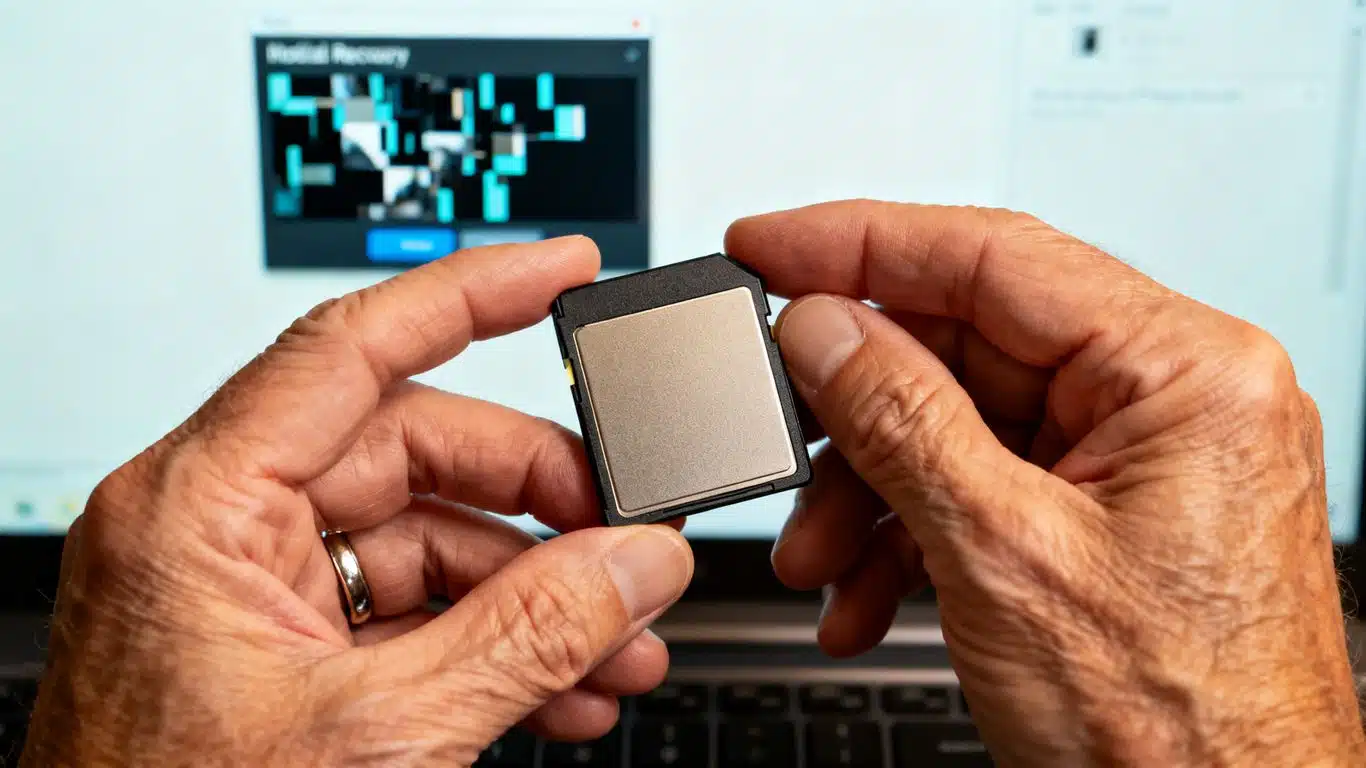
Harry, a wedding photographer in New South Wales, accidentally formatted his CFexpress Type B memory card, the type most newer professional cameras use instead of SD cards. He had taken new photos afterwards, then realised that wedding photos from February 10th, 2026 were never backed up. He tried Stellar Data Recovery and Disk Drill himself, but neither could find the missing wedding photos. This CFexpress memory card formatted wedding photos recovery case study documents how Payam Data Recovery used an advanced custom file signature technique to recover the photos that three other programs missed.
This CFexpress memory card formatted wedding photos recovery case study is every wedding photographer’s nightmare: irreplaceable client photos, accidentally formatted, with new images written on top. Standard recovery software could not find them. It took advanced techniques and professional experience to locate and recover the wedding photos. Based in Australia, Payam Data Recovery handles memory card recovery cases for photographers across Australia and internationally, including from the USA, New Zealand, UK, and worldwide.
The Problem: Wedding Photos Lost After Formatting CFexpress Card
Harry had shot a wedding on February 10th, 2026. At some point afterwards, he accidentally formatted his CFexpress Type B memory card and continued shooting new photos on it. When he realised the wedding photos had never been backed up, he tried to recover them himself using two popular consumer recovery programs: Stellar Data Recovery and Disk Drill. After long scans, neither program found the wedding photos from that specific date.
For a professional wedding photographer, losing a client’s wedding photos is a career-threatening situation. The photos were irreplaceable, and the standard DIY recovery tools had failed. Harry sent the card to Payam Data Recovery in Australia.
CFexpress Memory Card Formatted Wedding Photos Recovery Case Study: Diagnosis
The data recovery engineer plugged the CFexpress card into a USB reader and started with File Scavenger. After a long scan searching every sector, it found many photos, but none from February 10th, 2026. He then tried R-Studio. Another long scan produced the same result: nothing from that date.
At this point, two consumer programs (Stellar and Disk Drill used by Harry) and two professional programs (File Scavenger and R-Studio used by the data recovery engineer) had all failed to find the specific wedding photos. This is where experience and advanced techniques make the difference in professional memory card data recovery.
The CFexpress Memory Card Formatted Wedding Photos Recovery Case Study Process
The data recovery engineer used UFS Explorer’s IntelliRAW feature, but not in the basic way. Instead of running a standard raw scan, he created a custom file type signature from the working NEF files that were still on the card. This custom signature told the software exactly what to look for: the specific binary pattern of Nikon NEF raw files as they existed on this particular card.
This is an advanced technique that goes beyond what consumer recovery software can do. A standard scan looks for generic file headers, which may not match the specific format variations on a given card. A custom signature scan is far more targeted, essentially telling the software the exact fingerprint of the files it needs to find.
After the scan completed, the data recovery engineer searched the results by date for February 10th, 2026. The wedding photos appeared. He randomly tested several to check for corruption. All of them were perfect.
This CFexpress memory card formatted wedding photos recovery case study demonstrates that not all data recovery programs are the same, and knowing advanced techniques like custom IntelliRAW signatures makes the difference between recovering data and losing it forever.
CFexpress Memory Card Formatted Wedding Photos Recovery Case Study Results
The data recovery engineer saved the recovered wedding photos to a new USB hard drive, generated a file listing and video preview for Harry to review, and shipped it back via Australia Post Express overnight.
Harry’s wedding photos were saved, his professional reputation intact, and his stress levels back to normal. This CFexpress memory card formatted wedding photos recovery case study ended with a complete success. As the data recovery engineer notes, they get really tough cases every week, ones that IT professionals could not solve. He never gives up, trying different methods until finding what works.
Why Professional CFexpress Memory Card Data Recovery Matters
This CFexpress memory card formatted wedding photos recovery case study highlights several important points about professional recovery versus DIY attempts:
Not all recovery programs are the same. Stellar Data Recovery, Disk Drill, File Scavenger, and R-Studio all failed to find the wedding photos. UFS Explorer’s IntelliRAW feature with a custom signature succeeded. Different programs have different capabilities, especially with newer card formats like CFexpress Type B.
Advanced techniques require expertise. Creating a custom file type signature from existing files on the card is not something consumer software offers or most users would know how to do. This technique requires understanding how NEF raw files are structured at the binary level.
Formatted cards with new data are the hardest cases. When a card is formatted and new photos are written on top, the original files become much harder to find. Standard scans may miss them entirely, which is exactly what happened in Harry’s case.
Professional memory card data recovery at Payam Data Recovery uses specialist tools including the Ace Labs PC-3000 Flash, Rusolut Visual NAND Reconstructor, UFS Explorer, and professional chip readers. Over 2,000 IT companies and computer repair businesses across Australia trust Payam with their most difficult cases.
Why Professional Photographers Use CFexpress Cards Instead of SD Cards
Understanding why photographers like Harry use CFexpress cards helps explain both the value of the data on these cards and why recovery can be more complex than with traditional SD cards. This section of the CFexpress memory card formatted wedding photos recovery case study explains the technology behind these professional cards.
Speed is the biggest difference. CFexpress Type B cards use a PCIe interface with two data lanes, the same technology found in high-speed SSDs inside computers. This gives them read speeds of up to 2,000 MB/s and write speeds of up to 1,500 MB/s. By comparison, even the fastest UHS-II SD cards max out at around 300 MB/s read and 250 MB/s write. CFexpress Type B cards are roughly six to eight times faster than the best SD cards available.
Faster write speeds mean more shots. For wedding photographers shooting high-resolution RAW files in burst mode, write speed determines how many photos the camera can take before the buffer fills up. A fast CFexpress card clears the camera’s buffer almost instantly, allowing continuous shooting. With an SD card, photographers may have to pause between bursts while waiting for the buffer to clear, potentially missing critical moments during a ceremony or reception.
Professional cameras now require CFexpress. Most newer professional cameras from Nikon, Canon, Sony, Fujifilm, and Panasonic use CFexpress card slots. The Nikon Z8 and Z9, Canon EOS R5 and R3, Sony A1 and A9 III, and many others all use CFexpress Type B. Some cameras that originally supported XQD cards have been firmware-updated to also accept CFexpress Type B, since both card types share the same physical form factor.
Built for professional reliability. CFexpress cards feature rugged metal shells designed to withstand physical stress, temperature extremes, and vibration. This makes them more durable than plastic SD cards in demanding shooting environments like outdoor weddings, sports events, and wildlife photography.
The trade-off is cost. CFexpress cards are significantly more expensive than SD cards. A professional-grade 256GB CFexpress Type B card can cost several hundred dollars, compared to a fraction of that for an equivalent SD card. This higher cost makes data loss from accidental formatting even more painful, as photographers tend to reuse fewer, more expensive cards rather than keeping many cheap backups.
This is why cases like this CFexpress memory card formatted wedding photos recovery case study are so important for professional photographers. The data on these cards is often worth far more than the card itself: irreplaceable wedding photos, commercial shoots, and once-in-a-lifetime moments that cannot be re-shot.
Memory Card Data Recovery Assessment
If you are facing a situation similar to this CFexpress memory card formatted wedding photos recovery case study, memory card data recovery at Payam Data Recovery starts with a free assessment and quote with no obligation. For urgent situations such as professional photography work, we also offer an urgent assessment option to prioritise your case immediately.
Memory card data recovery typically costs $350 to $2,000 depending on the problem type and urgency or turnaround time requested. You receive a detailed quote before any work begins, so you know the exact cost upfront with no surprises.
Three service tiers are available:
- Economy: Best value, standard turnaround
- Priority: Faster turnaround, moves ahead of the Economy queue
- Emergency: Fastest possible, after-hours and weekends if needed
Payam Data Recovery recovers data from all memory card types including CFexpress Type A and Type B, SD, SDHC, SDXC, microSD, CompactFlash, XQD, and all others. All camera brands are supported including Nikon, Canon, Sony, Fujifilm, Panasonic, and all others.
All prices include GST and free return postage. Payam Data Recovery serves customers across Australia with laboratories in Sydney, Melbourne, and Brisbane, plus secure drop-off points in Perth and Adelaide with free shipping both ways. We also welcome international customers from the USA, New Zealand, UK, and worldwide. If anyone can recover your data, it’s us.

Frequently Asked Questions: Memory Card Formatted Photo Recovery
Can wedding photos be recovered from a formatted CFexpress card?
Yes. In this CFexpress memory card formatted wedding photos recovery case study, wedding photos were recovered from a formatted CFexpress Type B card even after new photos had been taken on top. The key was using an advanced custom file signature technique in UFS Explorer, after four other recovery programs failed.
Why did Stellar Data Recovery and Disk Drill fail?
Consumer recovery programs like Stellar Data Recovery and Disk Drill use standard scanning methods that look for generic file headers. When a card has been formatted and new data written on top, these standard scans may miss the original files entirely. In Harry’s case, even professional programs File Scavenger and R-Studio also failed. Only the advanced custom IntelliRAW signature technique in UFS Explorer found the wedding photos.
What is a custom file type signature in data recovery?
A custom file type signature is created by analysing working files on the card to identify their exact binary pattern. This pattern is then used as a targeted search template, telling the recovery software precisely what to look for. It is far more accurate than a generic scan, especially for RAW photo formats like Nikon NEF.
What is a CFexpress Type B memory card?
CFexpress Type B is a high-speed memory card format used by professional cameras from Nikon, Canon, Sony, Fujifilm, and Panasonic. It uses the PCIe interface with two data lanes, offering read speeds of up to 2,000 MB/s and write speeds of up to 1,500 MB/s. That is roughly six to eight times faster than the best SD cards. It is the standard card type in most newer professional cameras including the Nikon Z8 and Z9, Canon EOS R5 and R3, and Sony A1.
Why is CFexpress faster than SD cards?
CFexpress uses PCIe and NVMe protocols, the same technology found in high-speed computer SSDs. SD cards use an older bus interface. CFexpress Type B cards have two PCIe data lanes giving them a theoretical maximum of 2,000 MB/s, while the fastest UHS-II SD cards max out at around 300 MB/s. This speed difference matters for burst shooting, 4K and 8K video recording, and clearing the camera’s buffer quickly.
How much does memory card recovery cost in Australia?
Memory card data recovery at Payam Data Recovery typically costs $350 to $2,000 depending on the problem type and urgency or turnaround time requested. We offer a free assessment and quote before starting any work, so you know the exact cost upfront with no obligation. All prices include GST and free return postage.
Should I keep taking photos on a formatted card?
No. If you realise you have accidentally formatted a memory card with important photos, stop using the card immediately. Every new photo written to the card can overwrite the deleted files, making recovery harder or impossible. In Harry’s case, new photos had already been taken on top, which is why standard recovery failed.
Can Payam recover photos from SD cards as well as CFexpress?
Yes. Payam Data Recovery recovers data from all memory card types including CFexpress Type A and Type B, SD, SDHC, SDXC, microSD, CompactFlash, XQD, and all others. All camera brands and file formats are supported including NEF (Nikon), CR3 (Canon), ARW (Sony), RAF (Fujifilm), and all others.
What if my memory card is physically damaged?
If a memory card is physically damaged, bent, cracked, or not detected, Payam Data Recovery can perform chip-off recovery. This involves removing the NAND memory chip from the card and reading it directly using specialised equipment such as the Ace Labs PC-3000 Flash and Rusolut Visual NAND Reconstructor. Damaged cards are assessed individually and quoted before any work begins.
Does Payam Data Recovery accept memory card cases from outside Australia?
Yes. Payam Data Recovery welcomes international customers from the USA, New Zealand, UK, and worldwide. Memory cards are small and easy to ship internationally. Contact us at help@payam.com.au or call 1300 444 800 to discuss your case and arrange shipping.
About Payam Data Recovery
Payam Data Recovery is Australia’s longest-established data recovery company, founded in 1998 with over 150,000 successful recoveries completed. The company is trusted by over 2,000 IT professionals and computer repair businesses across Australia who send their most difficult cases, including complex memory card recoveries like this CFexpress memory card formatted wedding photos recovery case study. Whether it is a formatted CFexpress card, a damaged SD card, or a failed USB drive, the team has the tools and expertise to recover data when others cannot.
With full-service laboratories in Sydney (including the head office and main specialised lab in Rhodes, NSW), Melbourne, and Brisbane, plus secure drop-off points in Perth and Adelaide with free shipping both ways, Payam Data Recovery serves customers across Australia and internationally. All recovery work is performed in Australia and is never outsourced overseas.
For memory card recoveries, the team uses the Ace Labs PC-3000 Flash, Rusolut Visual NAND Reconstructor, UFS Explorer, professional chip readers, and specialist flash extraction tools. Everything is done here in Australia. We never outsource overseas.
Accidentally Formatted Your Memory Card? Lost Wedding or Event Photos? We Can Help.
Formatted your CFexpress, SD, or CompactFlash card? DIY recovery software failed? Stop using the card immediately and contact Payam Data Recovery. We use advanced techniques that go beyond what consumer software can do, including custom file signature scanning that recovers photos other programs miss.
Free assessment and quote with no obligation. Memory card data recovery typically costs $350 to $2,000 depending on the problem type and urgency or turnaround time requested. Urgent assessment available for professional photographers and time-critical cases.
All card types and camera brands supported: CFexpress Type A and B, SD, SDHC, SDXC, microSD, CompactFlash, XQD. Nikon, Canon, Sony, Fujifilm, Panasonic, and all others.
Based in Australia. International customers welcome. Over 2,000 IT companies across Australia trust us with their toughest cases. Nobody will try harder or invest more expertise into your case.
Submit your memory card for recovery | Phone: 1300 444 800 | Email: help@payam.com.au
Related Data Recovery Case Studies
- USB Flash Drive Connector Repair Case Study
- SanDisk SSD Data Recovery Case Study
- SSD NAND Degradation Recovery Case Study
Video Transcript: CFexpress Memory Card Formatted Wedding Photos Recovery Case Study
Hey, it’s Mike at Payam Data Recovery with owner Payam Toloo. Today’s case is every wedding photographer’s nightmare. Harry from New South Wales accidentally formatted his CFexpress Type B memory card, the type most newer professional cameras use instead of SD cards. He’d taken new photos afterwards, then realised wedding photos from February 10th, 2026 were never backed up. He’d already tried Stellar Data Recovery and Disk Drill himself with no success.
Payam plugged the card into his USB reader and started with File Scavenger. After a long scan searching every sector, it found lots of photos, but none from February 10th, 2026. He tried R-Studio next. Another long scan, same result, nothing from that date.
This is where experience and advanced techniques matter. Payam used UFS Explorer’s IntelliRAW feature, but not the basic way. He created a custom file type signature from the working NEF files still on the card, then used that custom signature to scan for the deleted wedding photos. This advanced technique tells the software exactly what to look for.
After the scan completed, he searched by date for February 10th, 2026. Bingo, many photos appeared. He randomly tested several to check for corruption. All of them were perfect.
Payam saved everything to a new USB hard drive, sent the file listing and video preview, and shipped it back via Australia Post Express overnight.
This case proves not all data recovery programs are the same, and knowing advanced techniques like custom IntelliRAW signatures makes the difference. Payam says they get really tough cases every week, ones IT professionals couldn’t solve. He never gives up trying different methods until finding what works. Harry’s wedding photos were saved, his professional reputation intact, and his stress levels back to normal.