

Published 7 June 2026. Updated 25 October 2026.
Client: Marcus, an architect from the Gold Coast
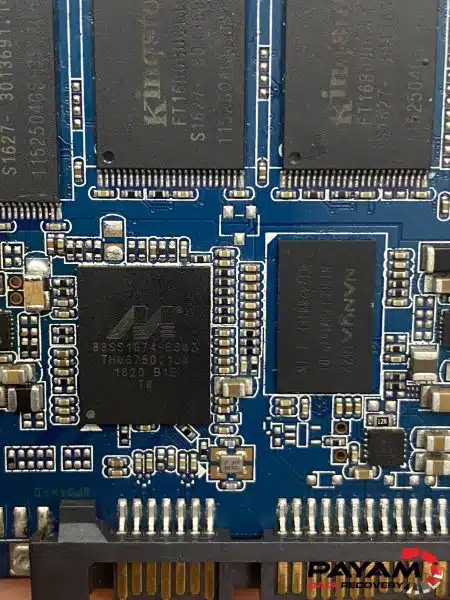
Device: Crucial 2.5-inch SATA SSD with a Silicon Motion controller
Problem: He accidentally formatted the drive, wiping years of project drawings and client work in a moment
Solution: Reading the memory channels on a PC-3000, uploading the loader, and rebuilding the translator before the TRIM command could finish erasing the NAND
Outcome: More than 90% of Marcus’s data recovered and copied to a new drive
Service: SSD data recovery
One Wrong Click Wiped Years of Work
Marcus is an architect on the Gold Coast, and in a single moment he formatted the wrong Crucial 2.5-inch SSD, taking years of project drawings and client files with it. The one thing he did right was the thing that saved him: he stopped using the drive straight away. This formatted SSD data recovery case turns on a detail most people never think about, which is what an SSD quietly does to itself in the seconds and minutes after you format it.
The Problem: Why a Formatted SSD Races Against the Clock
When you format an SSD, the drive receives a TRIM command that marks the old data blocks as no longer needed. The drive then erases those blocks in the background to keep its write performance up. This is the part that hurts: once TRIM has worked through the marked blocks, the data really is gone, not just hidden. A formatted hard drive can sit for weeks with the data still readable. A formatted SSD can erase itself within minutes. Because Marcus shut the drive down immediately, TRIM never finished its pass, and his files were still physically present on the NAND chips when the Crucial drive reached our lab.
The Formatted SSD Data Recovery Process
The drive went onto a PC-3000, and our data recovery engineer read the memory channels directly, uploaded a working loader, and rebuilt the translator. The translator is the map that tells the controller where each piece of data physically sits on the NAND, and a format scrambles it. This step is what separates a specialist from off-the-shelf software. Plug a formatted SSD into a generic recovery program and it usually reads a wall of zeros and declares the drive empty, because without a rebuilt translator it cannot see where anything lives. With the translator rebuilt, Marcus’s files appeared again.
From there the recovery was a matter of reading the data back out and verifying it. Our data recovery engineer recovered more than 90% of Marcus’s drawings and client work, a strong result for a formatted solid-state drive given how aggressively these drives erase themselves.
Formatted SSD Data Recovery Results
The team copied everything recovered onto a new drive and sent Marcus a full file listing and a short video preview so he could see exactly what had been saved before paying. Once he approved and paid, the drive was shipped back by Express Post. He got the large majority of his project history back from a drive he had given up on the moment he saw the format complete.
Why Professional Formatted SSD Data Recovery Matters
The honest part of this story is that a formatted SSD is never a guaranteed recovery. The result depends almost entirely on how long the drive kept running after the format, because every minute powered on gives TRIM more time to erase. That is also why the worst thing you can do is keep using the drive to “look for” the files, or run scan after scan hoping something appears. Each of those actions can finish the job the format started. Proper formatted SSD data recovery means powering down, getting the drive to a specialist, and rebuilding the translator on professional hardware before anything else is lost. If the data matters, it is worth the attempt even when the odds are uncertain.
Why People Choose Payam Data Recovery
A failed SSD needs an experienced data recovery engineer and professional tools, because its own controller and firmware decide where your files sit on its memory chips. That is the work we do every day.
- We are a specialist data recovery lab, not a computer repair shop. We have been recovering data since 1998, from over 300,000 devices.
- The best equipped data recovery lab in Australia: the Ace Lab PC-3000 for SSD firmware faults, Rusolut tools to read memory chips directly, microscopes and microsoldering stations for circuit board work, and over 30,000 donor parts, including around 20,000 donor hard drives.
- Over 2,000 IT companies and computer shops across Australia send us their customers’ complex cases, and data recovery labs and IT companies in more than 50 countries have sent us their difficult cases over the past ten years.
- Rated 4.9 from over 2,400 Google reviews.
- About 90% of our jobs are no fix, no fee. The hardest 10% carry an attempt fee.
- See your files before you pay. You tell us which files matter most. Before you pay for the recovery, we’ll send you a list of your recovered files so you can check them. If any of the files you listed are missing, tell us and we’ll search again.
- Pay by Visa, Mastercard, American Express, Apple Pay, Google Pay, Link or PayPal, split the cost with Afterpay, Zip, Klarna or PayPal Pay in 4, or pay by bank deposit (EFT).
- Everything is done in our own labs in Australia and never outsourced overseas. Call or visit us, and you can speak with the data recovery engineers who do the work.
We are not the cheapest. We are the best in Australia at this work. We know what to do, how to do it, and we will do our very best for you. Your best chance of getting your data back is with us.
SSD Data Recovery Pricing and Services
Every SSD case starts with a free assessment, and you decide whether to proceed once you have a written quote. Nothing chargeable happens until the terms are agreed in writing. The price of SSD recovery depends on the fault, and current prices are on our SSD data recovery page. Priority and Emergency are faster and cost more. Controller and firmware-level work, such as reading the channels and rebuilding the translator on a formatted drive, sits higher than a simple logical job and may involve an attempt fee. When that applies it is agreed up front and forms part of the total quote, never an extra charge added on top.
We offer Economy, Priority and Emergency turnaround so you can match the speed to how urgent the recovery is. Everything is done here in Australia. We never outsource overseas, and international customers are welcome, and return delivery is free after a paid recovery.
Frequently Asked Questions
Can you recover data from an accidentally formatted SSD?
Often yes, but it depends on timing. If the SSD was shut down soon after the format, the data is usually still on the NAND and can be recovered by rebuilding the translator, as it was for Marcus. The longer the drive ran afterwards, the lower the chances.
Why is formatting an SSD worse than formatting a hard drive?
A hard drive leaves the old data in place until it is overwritten, so it can stay readable for a long time. An SSD uses TRIM to erase formatted blocks in the background, sometimes within minutes, which is why speed matters so much more with an SSD.
I formatted my SSD. What should I do right now?
Shut it down and stop using it. Do not run recovery scans on it, do not write anything to it, and do not keep it powered on. Every minute it runs gives TRIM more time to erase. Then get it to a specialist.
Why does recovery software say my formatted SSD is empty?
Without a rebuilt translator, the controller cannot map where data physically sits, so generic software reads zeros and reports an empty drive. A specialist rebuilds that map on professional hardware, which is what makes the files visible again.
Will you recover 100% of the data?
Not always. Marcus’s recovery came back at more than 90%, which is a good outcome for a formatted SSD. How much returns depends on how far TRIM had progressed before the drive was powered down.
How much does formatted SSD data recovery cost in Australia?
The price of SSD recovery depends on the fault, and Priority and Emergency are faster and cost more. Controller and firmware-level work like a translator rebuild sits toward the higher end and may carry an attempt fee that is included in the total, not added on top. You get a written quote after a free assessment.
How long does it take?
It depends on the controller and how much of the NAND still holds recoverable data. We offer Economy, Priority and Emergency turnaround and confirm a realistic timeframe with your quote.
I am outside Australia. Can you help?
Yes. International customers are a regular part of our work. Get in touch and we will arrange shipping and the assessment. The easiest way for an international customer to reach us is by email at help@payam.com.au, which works in every time zone.
About Payam Data Recovery
Payam Data Recovery has been recovering data in Australia since 1998, with more than 300,000 devices recovered behind us. We run our own ISO 5 certified laminar flow cabinet and labs in Sydney and Rhodes NSW, Melbourne, and Brisbane, with secure drop-off offices in Adelaide and Perth, which send your device to our lab in Rhodes, NSW at no cost. For flash storage we use the Ace Lab PC-3000 Flash platform and professional NAND tooling, with microsoldering when a board needs it. Every case is handled in our own labs. We never send your drive overseas. You can read more about our team and history on our about page.
Request a Free SSD Data Recovery Assessment
Have you formatted the wrong SSD, or has a drive suddenly come up empty? The sooner you stop using it, the better the odds, so let us assess it.
Every SSD recovery comes with a written quote after a free assessment. We handle formatted drives, controller and firmware faults, and NAND-level recoveries. International customers are welcome.
SSD Data Recovery Service
Get a Free Quote
Ready to send it in? You can submit a new job online in a couple of minutes.
Phone: 1300 444 800 | Email: help@payam.com.au
Related Case Studies
- MacBook Air A1369 SSD data recovery case study
- SSD NAND degradation and translator rebuild
- SanDisk SSD chip-off data recovery
- SSD data recovery for a Brisbane customer
- Acer Switch chip-off recovery
- corrupted SD card footage recovery
- Encrypted 4TB portable SSD cloned without being unlocked
Video Transcript
Hey there, I’m Mike at Payam Data Recovery’s lab in Sydney, Australia. Today I’m watching one of their data recovery engineers work on a Crucial 2.5-inch SSD belonging to Marcus, an architect from the Gold Coast, who accidentally formatted his drive and wiped years of project drawings and client work in a single moment. The drive uses a Silicon Motion controller.
The data recovery engineer explained why the quick shutdown mattered. When you format an SSD, a command called TRIM tells the drive which data blocks are no longer needed. The SSD then permanently erases those blocks in the background to maintain performance. Once TRIM finishes, the data is gone forever. But because Marcus stopped immediately, the drive never finished the TRIM process and his files were still physically present on the NAND memory chips.
The data recovery engineer connected the SSD to the PC-3000, read the memory channels, uploaded the loader, and rebuilt the translator. This is the step that separates a specialist from generic software, which would simply show a wall of zeros and call the drive empty. With the translator rebuilt, the files appeared, and he recovered more than 90% of Marcus’s data.
The team copied everything to a new drive, sent Marcus a file listing and video preview, and once he approved and paid, shipped it back via Express Post. So if you have accidentally formatted an SSD, stop using it immediately and get it to a specialist. Even though the chances of success may be low depending on how long the drive ran after formatting, it’s worth a try if the data is important to you. The team at Payam Data Recovery in Australia can help.


