

Hard drive data recovery case study: This real-life example shows how Payam Data Recovery’s engineers recovered 49,500 photos from a failed external hard drive in Melbourne. The case study video above shows our ISO 5 certified laminar flow cabinet, the advanced PC-3000 tool in use, and our expert staff at work. This is not a simulation - it’s real footage from a successful client job. Watch this hard drive data recovery case study to understand how professional recovery works.
Hard drive data recovery case study summary: 50,000 photos at risk
Case study summary
Client: A photographer in Melbourne
Device: External hard drive holding her photo library
Problem: She could not access her files at all
Findings: A firmware problem and bad sectors, and later one of the four heads reading weakly and unstably
Solution: The connection was converted from USB to SATA for full access on PC-3000, the service area was blocked, a loader was uploaded into the drive’s RAM and every module backed up before cloning began. When the weak head showed itself the drive was shut down rather than pushed, and a head replacement was carried out
Outcome: With a healthy set of heads, three of the four heads cloned on the first run and the fourth followed. 99% of the data recovered
The engineer’s tip: If your drive is playing up, stop using it. Every further attempt risks more damage
Service: Hard drive data recovery
- We recovered 49,500 of 50,000 photos from a failing 2TB Seagate drive (99% success).
- The client was a Melbourne-based photographer who nearly lost her entire business portfolio.
- Our engineers identified bad sectors, firmware faults, and a failing read/write head.
- This hard drive data recovery case study demonstrates the value of expert intervention.
Watch the case study video above to see the full process in action. This is one of over 300,000 devices recovered we’ve completed since 1998 - making Payam Australia’s most trusted data recovery provider.
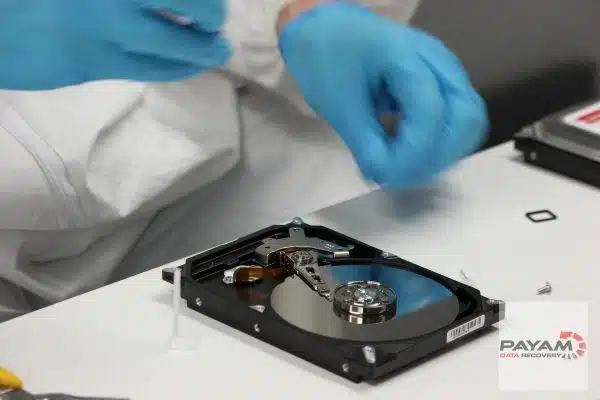
Payam Data Recovery in Melbourne performing hard drive data recovery on a Seagate HDD.
The client: Melbourne photographer in crisis
Rachel P., a full-time photographer in Melbourne, came to us devastated after her 2TB external drive suddenly stopped working. “That drive had everything,” she said. “If the data was gone, I’d have to start over.” This hard drive data recovery case study shares how we saved her business.
Initial Diagnosis
- Bad Sectors: Prevented reliable data access.
- Firmware Malfunction: Made the drive unmountable.
- Weak Head: One read/write head was severely degraded.
As How-To Geek warns, using a failing drive risks permanent loss. Rachel made the right call by stopping and calling us immediately.
Hard drive data recovery case study process
Every case starts with a free assessment. In our Melbourne lab, Dmitri - one of our senior engineers - performed these key steps:
- USB to SATA Conversion: Bypassed a failed USB interface.
- Firmware Fix: Applied a RAM loader for stability.
- Firmware Backup: Saved all critical modules using PC-3000.
- Head replacement: Replaced a weak head stack in our ISO 5 certified laminar flow cabinet.
The video shows this hard drive data recovery case study live - no stock footage, no actors. Just real engineers solving real problems.
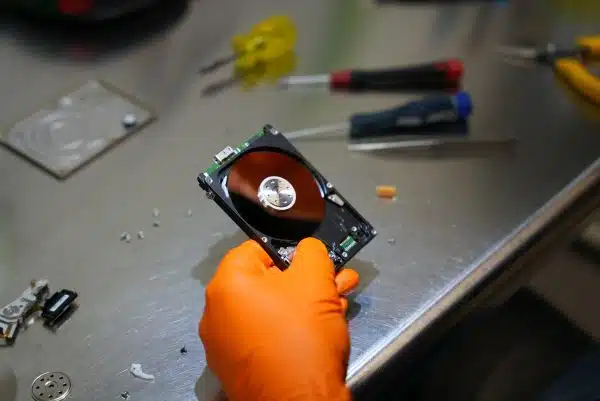
Platter-level inspection during a physical recovery at Payam Data Recovery Sydney.
Client Feedback from This Case Study
“I thought I’d lost 50,000 photos forever. But Payam recovered 49,500! Their team kept me updated the whole time. The video even showed what was happening. Incredible service.” - Rachel P., Melbourne
Why this hard drive data recovery case study matters
This case study is proof that professional recovery works. DIY efforts often cause further damage. According to Backblaze, 67% of businesses rely on their data. One wrong move can cost thousands.
- Real recovery labs, not drop-off locations
- ISO 5 certified laminar flow cabinet for head swaps and internal repairs
- Tools: PC-3000, MRT Pro, DeepSpar
- Trusted by over 2,000 IT firms and Australian businesses
More than 300,000 devices recovered. This hard drive data recovery case study is just one example of what we do daily.
Cost of data loss for businesses
What would this kind of failure cost your business?
| Type of Data Loss | Estimated Cost |
|---|---|
| Small (under 100 files) | $18,000 - $35,000 |
| Full Business Outage | Up to $15.6 million |
According to analysts, nearly 70% of small businesses close within a year of a serious data loss event. This case study highlights how critical it is to act fast and use professionals.
How to avoid becoming the next case study
No one expects to lose data. But most people aren’t prepared when it happens. Here are our top tips:
- Back up locally + to cloud services
- Use surge protection for all drives
- Use monitoring tools like CrystalDiskInfo
- Avoid DIY - power cycling a broken drive makes it worse
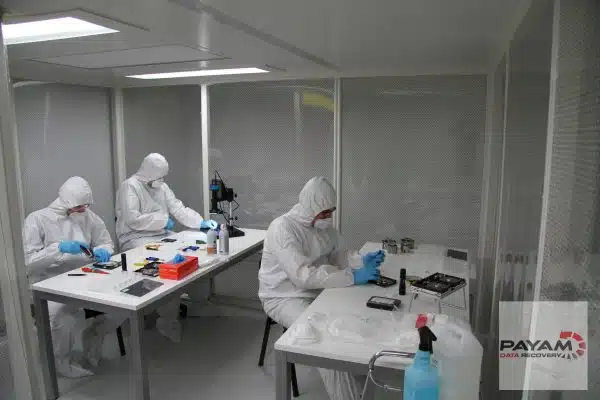
Our engineers performing a head swap during a hard drive data recovery case study in Sydney.
Frequently asked questions
My drive still shows up but I cannot open my files. What does that mean?
It usually points at firmware or bad sectors rather than a dead drive. That was the case here: the drive was present but the files were unreachable, and the diagnosis was a firmware problem together with bad sectors.
Why convert the drive from USB to SATA?
A USB bridge hides most of what a professional tool needs to see. Converting to a direct SATA connection gives full access to the drive on PC-3000, including the firmware area where the fault sat.
What does uploading a loader into RAM do?
It lets the drive run on known good instructions instead of its own damaged firmware, without writing anything to the drive itself. Access to the service area is blocked first so nothing can be altered, then every firmware module is backed up before any cloning starts.
You stopped the recovery partway through. Why?
Because one of the four heads was reading weakly and unstably. Pushing a failing head risks scratching the platters and losing far more than you gain, so the drive was shut down and the heads were replaced first.
What does 99% recovered actually mean?
Three of the four heads cloned successfully on the first run after the head replacement, and the fourth followed afterwards. Almost everything came back, and the small remainder is normal on a drive with bad sectors and a failed head.
What should I do if my drive starts playing up?
Stop using it. That is the engineer’s own advice in this case. Every extra power on and every retry risks turning a recoverable drive into a harder one.
Video transcript
Click to expand full transcript
I sat down with technician Dmitri, helping a customer with a hard drive issue who was unable to access her files. He suspected that there was a firmware problem and bad sectors on the drive. In order to diagnose and have a proper look at the issue, Dmitri needed to convert from USB to SATA to give himself more capabilities to work with on the PC-3000.
For those who may not know, the PC-3000 is a world leading technology that allows professional data recovery companies to recover your data without basically killing it.
He then blocked access to the service area and then uploaded the loader into the RAM. After that, he backed up every module and then got the data and started cloning it.
It was later clear that one of the heads was very weak and unstable, so Dmitri shut it down for the time being. A head replacement procedure was done. With a healthy set of heads, we attempted to make a clone of the drive. At that point, three out of the four heads were copied for the first run, and eventually the fourth head was successfully copied.
We are happy to report that we managed to recover 99% of the data and, as you can imagine, the customer was very pleased with the final outcome.
Dmitri’s pro tip is, if you have an issue with your hard drive, stop using it to prevent further damage. We hope this video helped you, and thanks for watching.
Glossary of terms
- ISO 5 certified laminar flow cabinet: Air-controlled workspace with less than 100 particles/ft³
- PC-3000: Industry-leading tool for drive diagnostics and recovery
- Bad Sectors: Areas of the drive that cannot reliably store data
- Firmware: Internal software that controls hard drive behaviour
- Head Stack: The mechanical arm that reads and writes data
Start your own case study today
Want to see what professional recovery really looks like? Watch the video case study at the top of this page. Then contact us to start your own recovery. We’ll assess your device free, explain the issues, and quote before we begin - no risk, no surprises.
International customers are always welcome.